Pigment Testing Equipment

Planetary Ball Mill- Pbm 2 Series

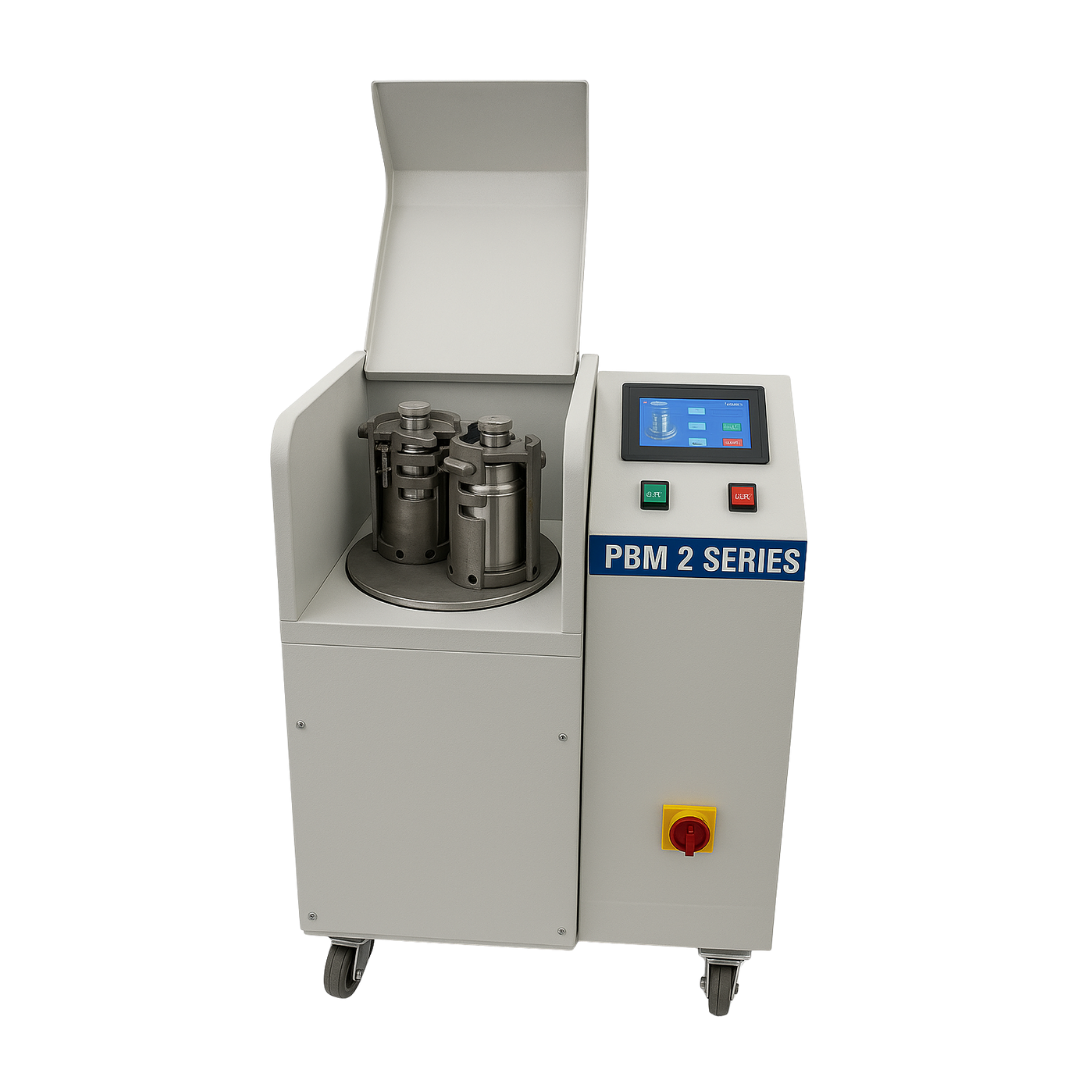
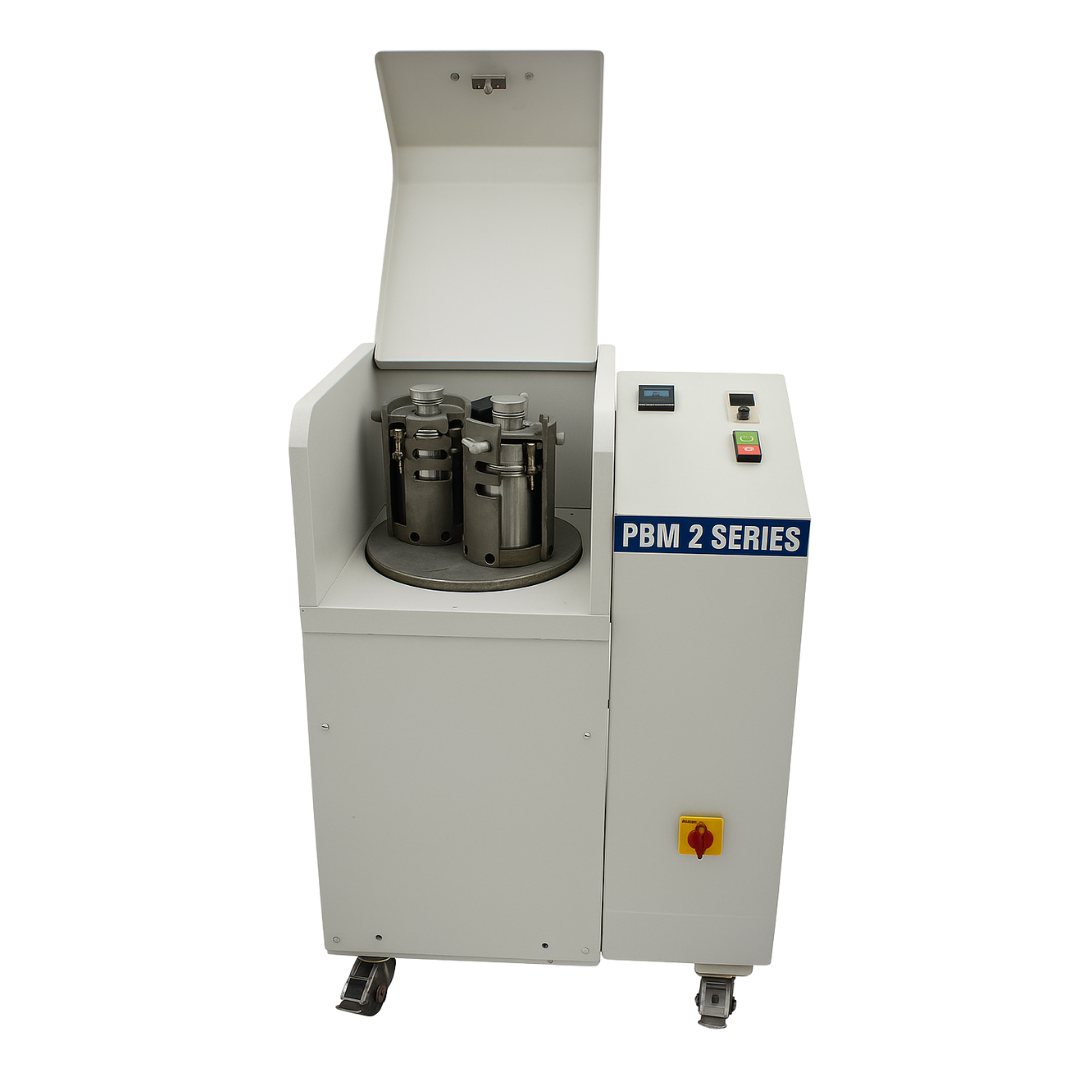
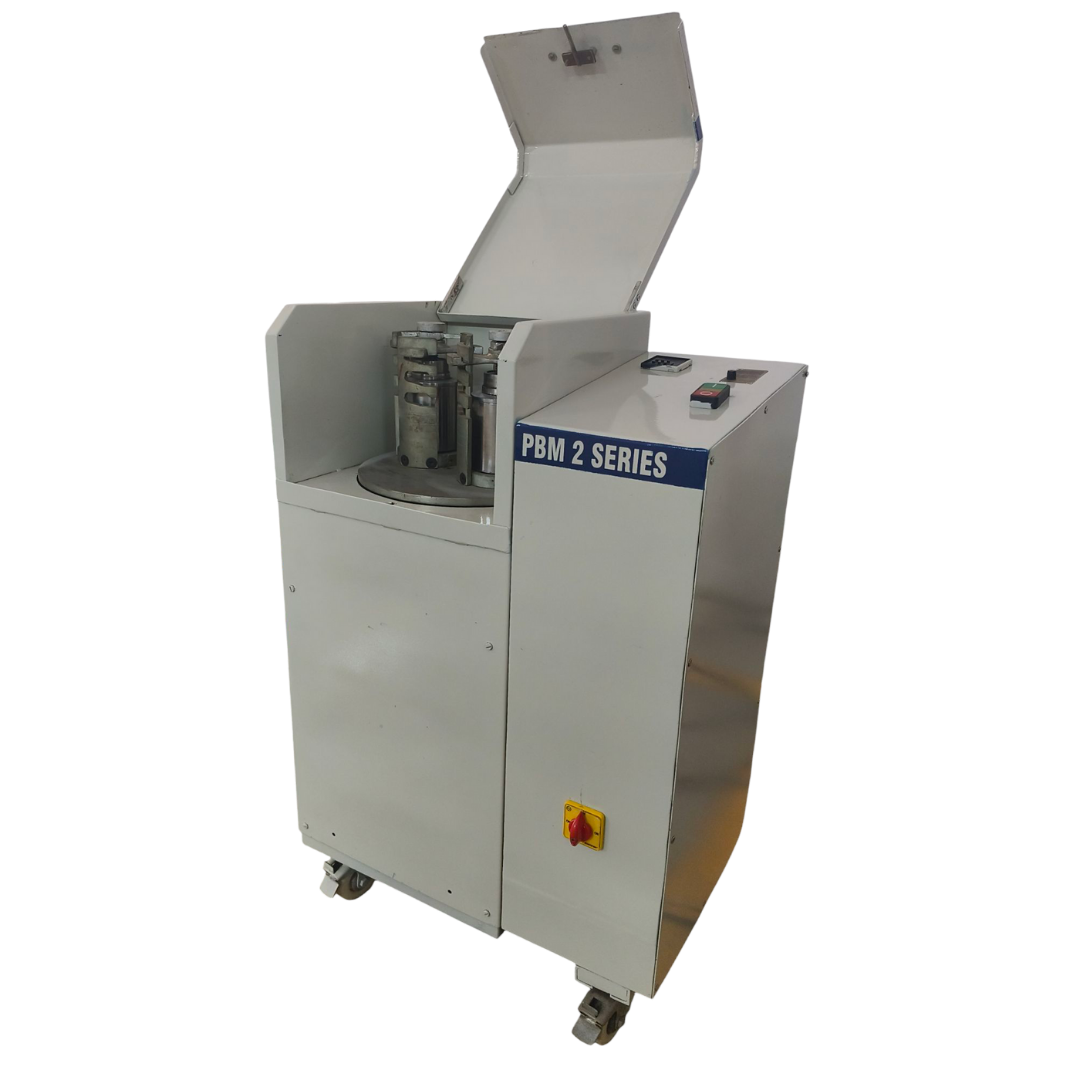
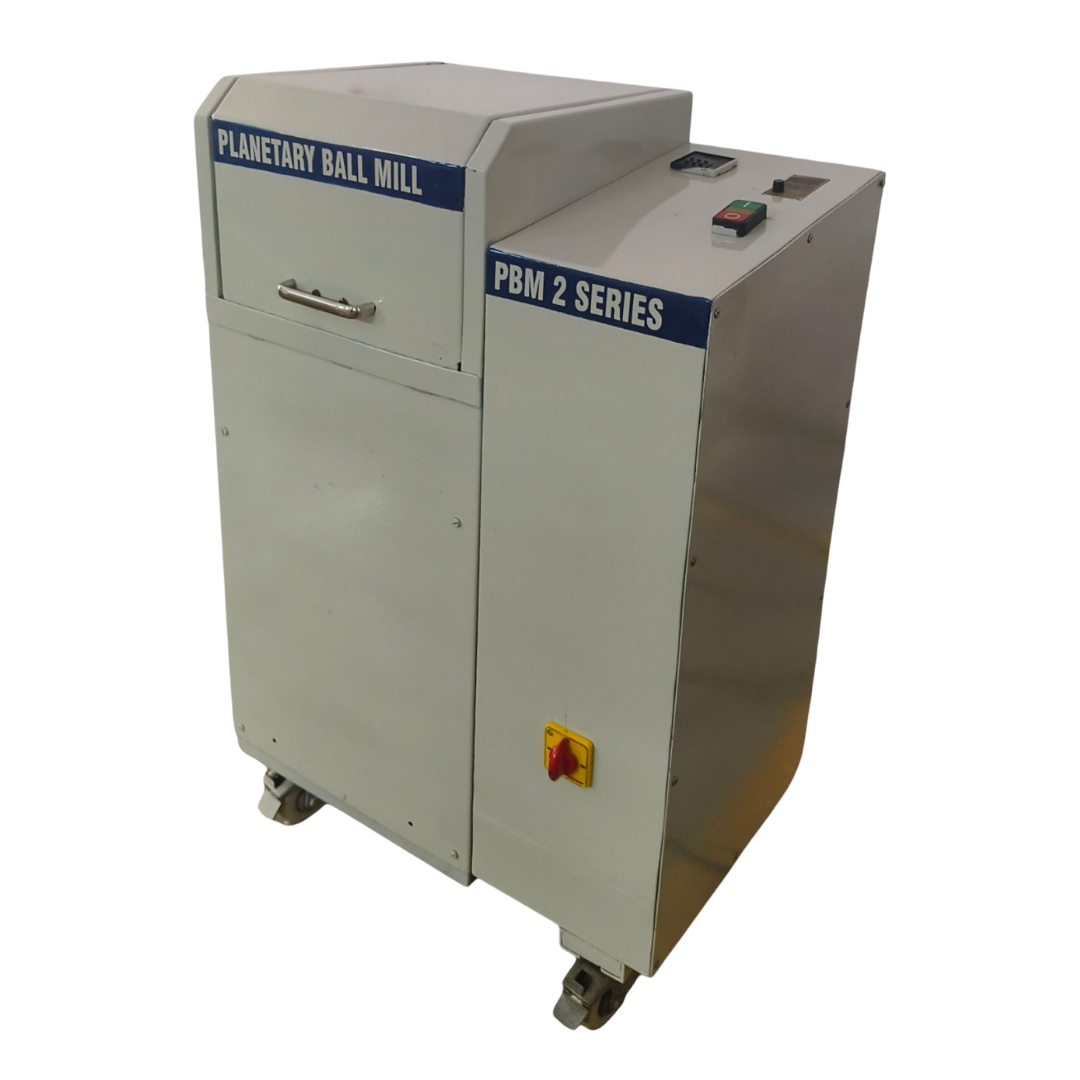
The Planetary Ball Mill PBM 2 is a high-performance benchtop model featuring two grinding stations, designed to accommodate grinding jars with a nominal volume ranging from 12 ml to 125 ml.

Advanced Planetary Ball Mill Technology By S & S Industries

The Planetary Ball Mill PBM 2 generates exceptionally high centrifugal forces, delivering superior pulverization energy for significantly reduced grinding times. Widely utilized across various industries, the PBM 2 meets the most stringent quality control requirements for purity, speed, fineness, and reproducibility. Engineered for precision and performance, this high-efficiency mill is ideal for cutting-edge research applications such as mechanochemistry—including mechano-synthesis, mechanical alloying, and mechanocatalysis—as well as ultrafine colloidal grinding down to the nanometer scale. Its robust design also makes it perfectly suited for routine laboratory tasks, including the mixing and homogenization of soft, hard, brittle, or fibrous materials.

Equipped With Two Grinding Stations For Standard Applications

  • Maximum rotational speed of 650 rpm
  • Supports feed sizes up to 10 mm, achieving a final fineness of 0.1 µm
  • Compatible with grinding jars ranging from 12 ml to 125 ml; 12 ml and 25 ml jars can be stacked (two per station) 
  • Features GrindControl for real-time temperature and pressure monitoring inside the jar
  • Aeration lids for precise atmospheric control within the grinding chamber
  • Programmable operation with storable SOPs and cycle programs
  • Available with five different jar materials for both dry and wet grinding applications

Planetary Ball Mill Pbm 2 – Functional Principle

In the Planetary Ball Mill PBM 2, the grinding jars are positioned eccentrically on the sun wheel. The sun wheel rotates in the opposite direction of the grinding jars at a 1:-2 ratio, generating complex motion patterns.

As a result, the grinding balls within the jars experience superimposed rotational movements, known as Coriolis forces. The speed differential between the grinding balls and jars creates an interaction between frictional and impact forces, generating exceptionally high dynamic energies. This precise interplay of forces enables efficient and highly effective particle size reduction.

The Ideal Ball Mill For Standard Applications

  • Maximum speed of 650 rpm for efficient grinding.
  • Supports feed sizes up to 10 mm, achieving final fineness as low as 0.1 µm.
  • Single grinding station compatible with jars ranging from 12 ml to 500 ml.
  • Stackable jars: 12 – 80 ml can be stacked (two jars per station).
  • Grind Control system enables precise measurement of temperature and pressure inside the jar.
  • Aeration lids for controlled atmosphere regulation during grinding.
  • Storable SOPs and cycle programs for optimized and repeatable grinding operations.
  • Compatible with five different jar materials, suitable for both dry and wet grinding applications

The Ideal Ball Mill For Standard Applications

  • Versatile Material Compatibility – Wear parts available in various materials to suit different products.
  • Flexible Grinding Media – Supports media sizes ranging from 5 mm to 2.5 mm for precise grinding.
  • Superior Cooling Efficiency – Forced cooling water circulation in the outer jacket enables processing of temperature-sensitive materials.
  • User-Friendly Design – MILLGRIND DISC Series mills can be easily dismantled for quick configuration changes.
  • Intuitive Operation – Simple setup and adjustment of operating parameters for seamless performance.
  • Seamless Scalability – Consistent grinding technology ensures smooth scale-up across all MILL GRIND DISC Series
  • Cost-Effective Performance – Designed for low operating and maintenance costs, maximizing efficiency and reliability.

Tailor-Made Solutions

With our expertise, we cater to diverse and specialized project requirements by delivering tailored solutions—such as the PBM 2 Series —to meet your specific process needs.

Catalouge Download

Discover more about our PBM 2 Series in a compact PDF format—field-proven thousands of times for dispersion and ultra-fine grinding

Technical Specifications

Specifications Table - Blue Design
Specification Details
Applications Pulverizing, mixing, homogenizing, colloidal milling, mechanical alloying, mechanosynthesis, nano grinding
Fields of Application Agriculture, biology, chemistry, construction materials, engineering/electronics, environment/recycling, geology/metallurgy, glass/ceramics, medicine/pharmaceuticals
Feed Material Soft, hard, brittle, fibrous – dry or wet
Size Reduction Principle Impact, friction
Material Feed Size * < 4 mm
Final Fineness * < 1 µm, for colloidal grinding < 0.1 µm
Batch Size / Feed Quantity * Max. 2 x 50 ml
Number of Grinding Stations 2
Speed Ratio 1 : -2
Sun Wheel Speed 100 - 650 min⁻¹
Effective Sun Wheel Diameter 157 mm
G-force 37.1 g
Type of Grinding Jars EasyFit, optional aeration covers, safety closure devices
Material of Grinding Tools Hardened steel, stainless steel, tungsten carbide, agate, sintered aluminum oxide, silicon nitride, zirconium oxide
Grinding Jar Sizes 12 ml / 25 ml / 50 ml / 80 ml / 125 ml
Stackable Grinding Jars 12 ml / 25 ml
Grinding Time Setting Digital, 00:00:01 to 99:59:59
Interval Operation Yes, with direction reversal
Interval Time 00:00:01 to 99:59:59
Pause Time 00:00:01 to 99:59:59
Storable SOPs 10
Measurement of Input Energy Yes
Interface RS 232 / RS 485
Drive 3-phase asynchronous motor with frequency converter
Drive Power 750 W
Electrical Supply Data Different voltages available
Power Connection 1-phase
Protection Code IP 30
Power Consumption ~ 1250 W (VA)
Net Weight ~ 120 kg
Standards CE

Note: The data shown are indicative values and depend on the product being processed. Viscosity of the product directly variable to flow rate.

Application

Industries Wise

YOUR TRUSTED PARTNER

ALWAYS HERE TO SUPPORT YOU

With our local branches and on-site technical experts, we are proud to serve you as a trusted engineering company and experienced process specialist “*” indicates required fields